.png)
PaMAR Mid-Term Review Highlights Progress and Sets Course for the Future

Between the 25th May and 5th June 2026, the PaMAR Project’s Mid-Term Technical Review took place, a key opportunity to analyse the results achieved, identify challenges and guide the actions to be implemented in the coming years. The review covered the period from November 2023 to March 2026, providing a comprehensive assessment of the project’s implementation to date.
Find out more about the PaMAR Project here.
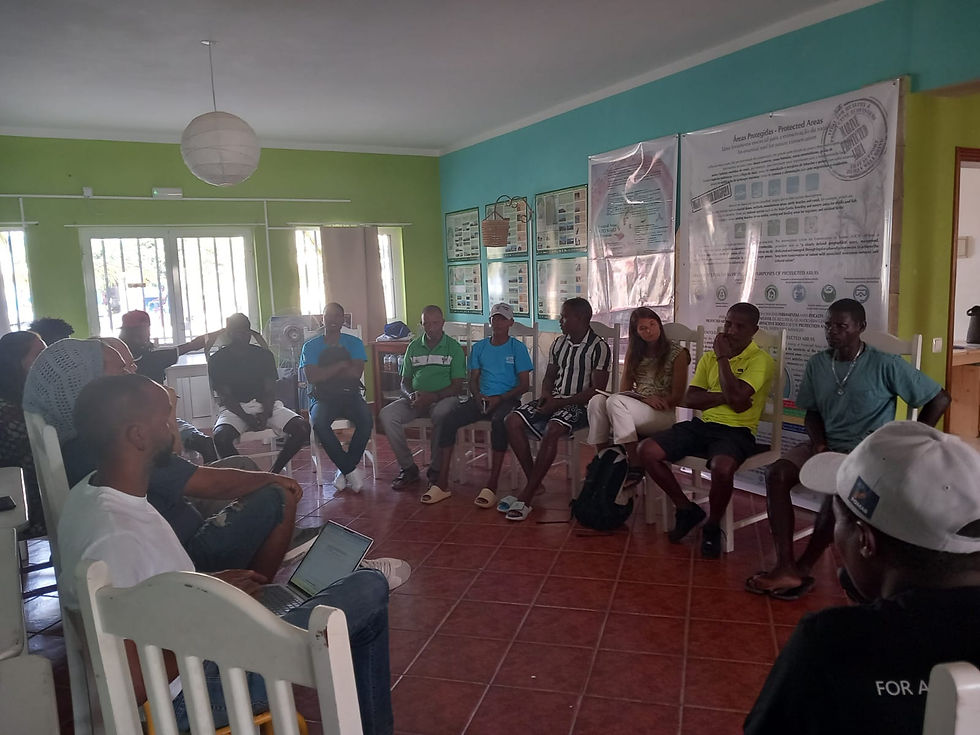
As part of the mid-term evaluation process, the project was visited by external consultant Diogo Ferreira, who was commissioned by the Blue Action Fund to conduct this review. During the mission, Diogo met with the technical teams from Fauna & Flora, partner organisations, government institutions and beneficiary communities, enabling him to gather different perspectives on the progress and challenges of implementation.
The main objectives of the evaluation were to:
analyse the degree of compliance with the targets set out in the project design;
assess the relevance and performance of the interventions carried out;
verify the application of environmental and social safeguards;
identify lessons learnt that could contribute to strengthening future actions, and
generate practical recommendations to maximise the impact of activities during the remaining implementation period.
The process took a comprehensive approach, and included a review of technical and programme documentation; individual interviews with key stakeholders to provide them with the opportunity to give their views openly and transparently; focus group discussions; remote consultations; and field visits to four of the six islands covered by the project, namely Santo Antão, São Vicente, Maio and Fogo, including the Rombos islets. This methodology enabled the collection of quantitative and qualitative evidence on the performance of the various components of PaMAR.
During the mission, activities relating to the management and governance of Marine Protected Areas, biodiversity conservation, ecological monitoring, institutional capacity building, community engagement and the promotion of sustainable livelihood alternatives for coastal communities were assessed.
More than just a review exercise, the Mid-Term Technical Review helped to foster honest and constructive reflection on areas for improvement, serving as a basis for a collaborative review involving the consortium and the project partners.
By analysing the progress made and the challenges that remain, the process helps to strengthen the project’s implementation and ensure that the investments made continue to generate lasting benefits for marine ecosystems and the communities that depend on them.
Diogo Ferreira, the external consultant who led the Mid-Term Technical Review, shared the following observations:
‘In Cabo Verde, we’ve had a particularly fruitful process of analysis, reflection and joint discussion, which I believe will make an important contribution to the implementation of PaMar in the coming years and, more broadly, to the strengthening of marine conservation in the country.
Throughout these months of work, I would like to highlight the willingness, commitment and consistent involvement of all the partners involved, as well as the transparency and openness with which the various issues and challenges were addressed. Such processes inevitably bring constraints and opportunities for improvement, but it is precisely these frank and constructive discussions that enable us to enhance the impact of our interventions.
I leave Cabo Verde with a strong conviction: the technical expertise and professionalism of national stakeholders, combined with the growing interest and support from international partners and donors, are now creating very favourable conditions for advancing the marine conservation agenda. These are opportunities that must not be wasted.
PaMar has the potential to be a key driver on this journey, and I hope that this MTR has contributed, albeit modestly, to strengthening this path.'
As the PaMAR Project moves into its second phase of implementation, this evaluation reinforces the importance of collaboration between public institutions, civil society organisations and local communities in building a more effective, resilient and sustainable network of Marine Protected Areas for Cabo Verde.




Comments